
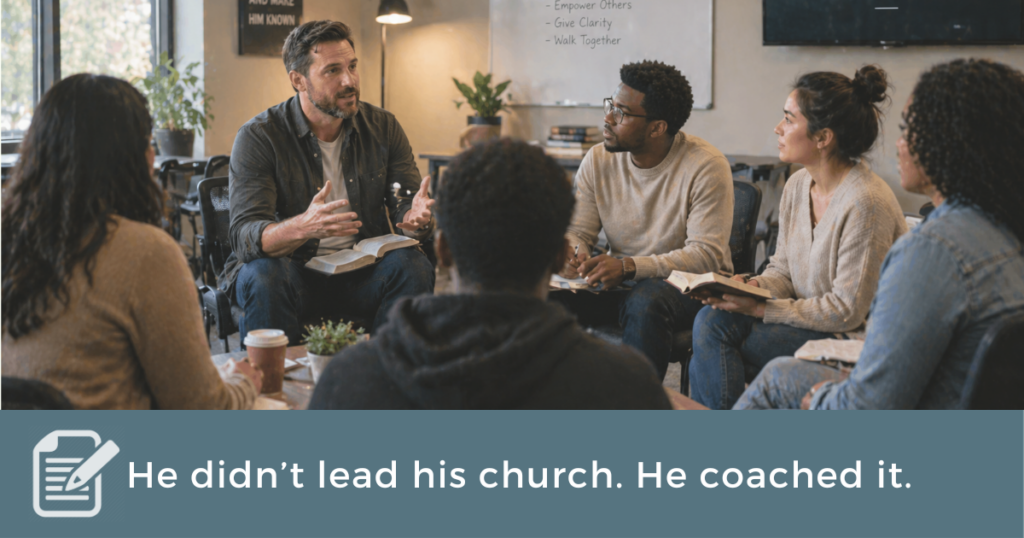
Pastor Keith didn’t stand out to me as someone who could grow a church. He wasn’t magnetic. He wasn’t a great speaker. He wasn’t overly energetic. And yet, he grew a church right before my eyes. The previous pastor had pushed hard to make changes, hoping for growth. In defeat, he left the church for greener pastures. (And then he immediately died of a massive heart attack.)
Keith didn’t push. If anything, he pulled. He pulled together a group of anyone who would come to create a ten-year plan. He listened. He asked questions. He made connections. And soon enough, they created a map for the future of the church. Not every leader had attended the planning meetings, but Keith had their permission to move ahead.
Once the plan was in place, Keith started executing. He wasn’t forceful. He wasn’t timid. He was calm, consistent, and anchored to the plan developed by the people who showed up.
And the church grew. It quickly doubled in size.
He got pushback. He didn’t take it personally. Instead, he listened and adjusted as needed, but overall he stayed accountable to the people’s plan.
What made this work? Keith had a coaching mindset, though he would never have called himself a coach.
You may not call it coaching. Keith never did. But what he was doing has a name—and it’s worth understanding. In fact, you’ve already seen most of them in Keith. Let’s look at how these coaching skills quietly shaped the culture of his church.
He Created Clarity Without Control
Keith started with the board. He told them he wanted to start a ten-year planning group, and they were all invited to participate if they wanted. These meetings were public and open to anyone who wanted to participate. Not every leader came, but each was aware of what was happening.
Keith didn’t cast a vision. He built agreement.
One thing that Keith did not do was bring in preconceived notions of what the plan should be. For many of us, that is the hardest part. We want to be the expert, and we’re incredibly frustrated when not everyone recognizes our authority. Keith did not carry that burden.
People don’t participate if they don’t know the rules. Agreements are at the root of trust. Keith defined the process, the code of conduct, the way decisions would be made, and how the plan would be rolled out. No one was confused by what Keith was doing.
Coaching leaders create a shared vision.
He Stayed Curious Under Pressure
Someone always tries to sabotage a change process. Always. Keith didn’t take pushback personally. People don’t like change. Keith didn’t get defensive. He understood change is hard, people need to be heard, and you can make adjustments without changing direction.
When people attacked Keith, he did not assume a defensive posture.
Keith’s mindset was to coach the process, which included tending to the discomfort people experience when things change. He built availability into his plan. When people came into his office, he didn’t prepare for battle but invited them to the table to participate in the plan. What was their concern? How could we adjust? How might they participate?
Pressure occurs when people feel like they don’t have any say, when they feel like they’re losing something they think they can’t live without. Releasing the pressure with a pop is a dangerous move. Instead, pressure is best released with a listening ear. And even when the attacker doesn’t get onboard, everyone sees that you received them well, and that allows the movement to continue.
Coaching leaders listen to understand.
He Moved Forward Without Forcing
The previous pastor lovingly pushed and shoved and got the church nowhere. He was one of my favorite people, but his understanding of leadership was inadequate for the task. He saw leadership as a battle. Keith saw leadership as a dance.
When the path got rocky, Keith slowed down and removed the rocks. Not by himself, but with the participation of those who were on the journey. Some leaders try so hard to get people to move that they don’t show much concern for how the people arrive. Keith wanted to be sure that the people entered into this new era feeling strong and good.
More than anything, he had a natural steadiness to him, a commitment to process. If he ever got hurt, he never showed it. Wounded leaders find it difficult to deal with obstinate followers.
Keith kept himself healthy and didn’t rely on the church’s success as a measure of his own.
Coaching leaders create a pull by removing the obstacles ahead.
Conclusion
Keith moved on after a few years, and took a position helping other pastors grow their churches with the same mindset that worked for him. Keith is now 90 years old. His heart is strong, and he still finds ways to help his church move forward.
These aren’t the leadership instincts most of us were trained in—but they are at the core of a coaching mindset.
- Clarity Without Control → Establishes and Maintains Agreements
- Curious Under Pressure → Maintains Presence and Listens Actively
- Forward Without Force → Evokes Awareness and Facilitates Growth
To build a coaching culture in your church, don’t start with training— start with posture. Ask a few reflective questions:
- Where are you forcing instead of forming?
- Where are you reacting instead of listening?
- Where are you trying to gain buy-in instead of building agreement?
A coaching culture isn’t something you implement. It’s something you embody—long before anyone else names it. Just like Keith.