
A few months ago, I saw my doctor for my annual checkup. I had a few complaints, particularly about my feet – some numbness and a bit of pain. A blood test returned my A1c at 7.1, which put me in the diabetic range. I got a call from a clerk who told me I am now a diabetic in the same way you would tell someone they won $10,000. Good news!
She offered to connect me to a diabetic counselor, but I declined.
I got a blood glucose monitor and figured out how to use it. I took a reading every morning along with my new medication. The numbers were lower but still too high. This went on for two months. I sent an email to my doctor telling her the results, assuming she would double my dose. She did not. She said to continue for one more month.
Frankly, I was irritated and maybe a bit embarrassed.
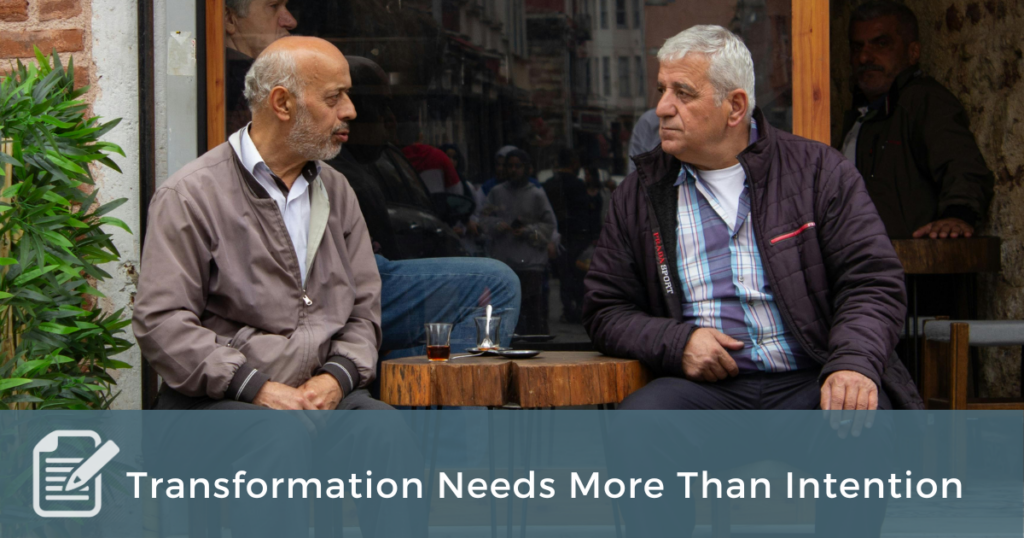
One evening I was talking to my oldest brother. He is ten years older than me, so he’s kind of a canary in a coal mine for me. If something is going to happen, it’s going to happen to him ten years earlier! I told him about my situation, and he said, “I had to give up diet pop. I assume you already have.” I had not.
I didn’t think that would instantly solve my glucose problem, but it did evoke a new awareness in me. I was not trying my hardest. The next morning I drank my coffee without the usual sugar-free cream and stevia. I’m not saying it was necessary, but it was definitely part of me making a strong effort.
Then Danelle, my wife, gave me a framework. You get 135 carbs a day. You have to count them. She had told me this before but honestly, I was not ready to listen. But now I was. Adding carb tracking to my diet app was actually really easy. It took a few more weeks for me to get a handle on what I could eat and what I couldn’t. My numbers dropped to the high side of average.
I started losing weight. Carbs and calories must correlate at some level. The choices that lowered my carbs also lowered my calories quite a bit. I started feeling better. There was no more pain in my feet, though the numbness remained. My blood glucose fell into the normal range for the first time.
Yesterday, I returned to the doctor. I wondered if she would leave me on the same dosage or go ahead and double it since I was not yet on the full dose. To my utmost surprise, she said, “You can stop taking the medication if you want, as long as you maintain your diet.” I’m not ready for that. I have to make sure this transformation sticks.
Transformation doesn’t occur without a trigger
Motivation is a key component. For me, some minor motivation got me started in the right direction with commitment but not much drive. I tried to accept as quickly as I could the label of diabetic. The major motivation occurred in conversation with my brother.
Most major motivation comes from conversation. Not necessarily from motivational conversation – cheerleading or shaming or “shoulding” – but from thought evoking conversation, where the person makes their own decision.
Transformation doesn’t occur without a framework
There is always an exception to the rule, but you rarely get anywhere that someone hasn’t already been. The fact that it was easy to add carbs to my diet app tells me they added that feature on purpose. It is an oft used navigational tool.
Conversations are not only a motivational tool. They can also provide a framework. The most useful tool in Coach Approach Ministries is without question the hourglass model developed by one of our founders, Jane Creswell. This simple tool helps conversations move from awareness to action to accountability. I use this model 95% of the time when I coach.
Transformation doesn’t stick without accountability
This is where my story stands as of today. In three months, I’ve moved from diabetic to normal, but I’ll bet I could move back to diabetic even faster if I don’t commit myself to watching my carbs every day for the rest of my life. I’ll continue to check my blood sugar, weigh myself, and track my carbs.
Even more important, I’ll continue to have conversations about diabetes with my family and friends, and I’ll schedule another appointment with the doctor to make sure I’m on track.
When Intention Becomes Ownership
What stands out to me now is that I had information before I changed. I had a diagnosis. I had a monitor. I had medication. I had access to help. Danelle had even given me the carb framework before.
But I was not ready to own it yet.
Then one conversation with my brother helped me hear the truth differently. It did not shame me. It did not force me. It did not solve the problem for me. But it did evoke awareness. Once I had awareness, I was ready for a framework. Once I had a framework, I needed accountability.
That is the power of a transformational conversation.
People around us need these kinds of conversations all the time. Not only around health, but around leadership, marriage, parenting, ministry, calling, discipleship, and faith. They do not simply need someone to tell them what to do. They need space to notice what is true, name what matters, and take responsibility for the next faithful step.
That is why I care so much about coach training.
CAM 501, Foundations for Christian Coaching, is not merely a class about asking better questions. It is a place to learn and practice conversations that help people move from awareness to action to accountability. Because when conversations are handled well, they can become the trigger, the framework, and the support that help transformation stick.
What would change if you became more intentional about the conversations already entrusted to you?